

Letter of intent LOI: what to prepare before you present it
When a client writes to me “ok, I like this business, let us make the offer”, my answer is always the same: good, now let us do the homework.
I am Francesco Ponticelli, Business Broker and REALTOR® in Florida, license #3590963. I have lived in Miami since 2019 and I have followed this city since 2003. This article is the checklist I actually use with my clients before presenting a letter of intent, whether to a seller or to the owner of a commercial space.
The honest truth is that in Florida the LOI is not judged on the offered price alone. It is judged on who you are. Anyone who tells you that only the money matters has never seen a higher offer turned down in favor of a better presented candidate.
The short answer
A well presented letter of intent is not a sheet of paper: it is a package. Six elements are needed, all together: cover letter, detailed LOI, presentation of your company or your project, professional background, proof of funds with the last two bank statements and the documents specific to your business, such as licenses or certifications you already hold.
The complete package is what wins against a financially similar offer.
Last updated: September 2026. Reading time: about 7 minutes. Author: Francesco Ponticelli, Business Broker and REALTOR® license FL #3590963.
Why in Florida the LOI is judged on who presents it

Someone selling a running business, and even more so someone leasing a commercial space, is not choosing a price alone. They are choosing who will take their place, or who will pay the rent for the next five years.
The owner of a commercial space asks two questions, always the same ones: will this person pay the rent? Will this business work in this space? If your letter of intent LOI does not answer those two questions, the offer stays a number without context.
Uncomfortable truth: I have seen candidates with a smaller budget get the space because they brought a serious presentation, while the one offering more had sent a three line email.
The six documents to attach to the letter of intent
These are the six documents I attach to every letter of intent LOI I present.
1. Cover letter. A few lines introducing who you are and why that space or that business interests you.
2. Detailed letter of intent. The proposed terms in writing: price, payment structure, contingencies, due diligence and closing timelines.
3. Presentation of your company or your project. Concept, professional experience, positioning. It is the part almost everyone underestimates and it is the one that makes the difference.
4. Professional background and results. If it is not already inside the presentation, attach it separately.
5. Proof of funds. The last two bank statements. Without this document the negotiation usually does not even start.
6. Documents specific to your business. Licenses you already hold, professional certifications required to operate, particular permits.
On top of these come the documents my brokerage is required to collect: identity document for every named party, for compliance with Florida regulations, and a valid email address for digital signatures.
How to build the presentation if you are new to the market
If you do not have a track record in Florida yet, the presentation has to make up for it. This is the sequence that works.
- The story of your company, if you have one.
- Experience in other locations, other states or other countries, and if you are an international brand say so right away.
- What sets you apart from the other possible candidates: what value and what expertise you bring that the others do not.
- Why you are certain you will not miss a rent payment.
- Why you are certain your business will work in that exact location.
The last three are not rhetorical questions. They are exactly the questions the owner will ask himself when he is alone making the decision, and it is in your interest that you wrote the answer for him.
In the package I prepare, those answers sit in three sections.
Concept. The concept and the renderings, brand positioning, the marketing plan, images of the products or the product concepts, information on the brands you carry if you distribute any that matter, data supporting the idea and the typical customer profile.
Financial plan. A summary of the business plan. You do not need a bank grade document, you need the numbers to hold up.
Store operations. Opening hours, menu or product range, retail prices and a forecast of how revenue will split by product category. For a bar, for example: coffee, drinks, food, salads.
Use images wherever it makes sense. A package you can look through in three minutes beats one that takes twenty to read.
What changes between an LOI to the seller and one to the landlord
| Element | LOI to the seller | LOI to the landlord |
|---|---|---|
| What matters most | Price and certainty of closing | Strength of the candidate over time |
| Proof of funds | Essential | Essential |
| Concept presentation | Useful | Decisive |
| Contingencies | Due diligence and lease assignment | Permits and build out |
| Typical response time | 2 to 7 days | 1 to 3 weeks |
Indicative timing, based on the deals I handle in South Florida.
A real case: two first time operators and a space on Central Avenue
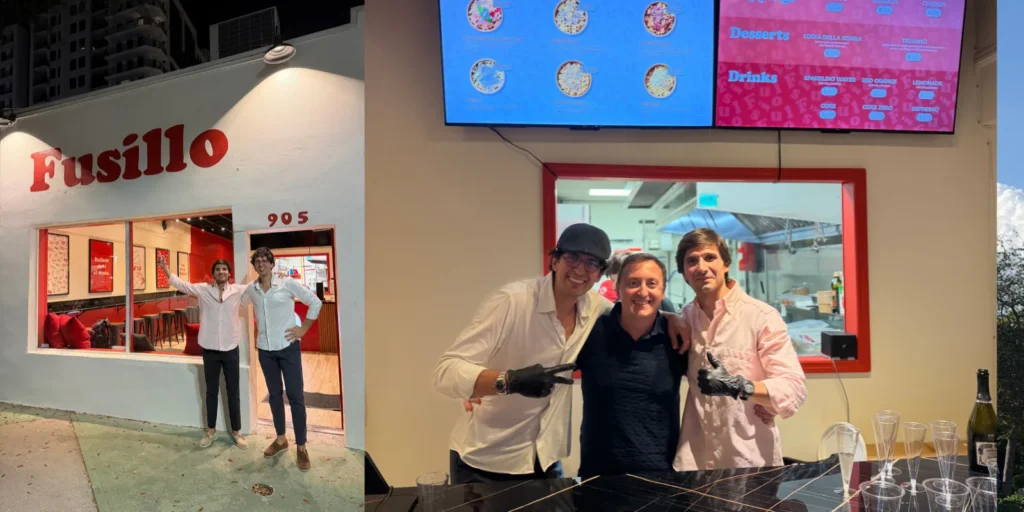
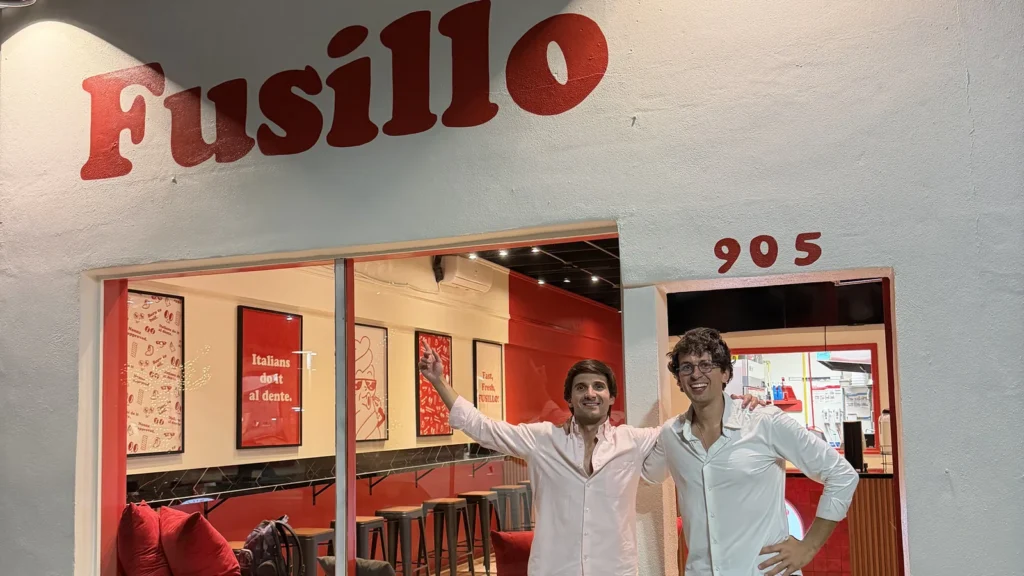
Alessandro and Giangiacomo have known each other since they were children. In the summer of 2025 they both left their jobs to open their first business together, in a country that was not theirs.
Their resumes were solid and had nothing to do with American hospitality. Alessandro is a civil engineer and worked on large projects for a large Italian company. Giangiacomo was a Carabinieri officer and later a restaurant manager. Real experience, built inside large organizations. Operating history in the United States: zero.
That is the profile many landlords set aside before they even sit down. Not out of prejudice. An owner leasing space on a commercial street is thinking about the risk of it sitting empty, and faced with two foreigners opening their first place, with no American financials to show, the easy answer is no.
They wanted 905 Central Avenue, in the EDGE District of St. Petersburg. Around 700 square feet. Small, on a street that is growing, exactly where it made sense to be.
What changed the conversation was not luck. They arrived with the project built out in detail, together with the agency that supported them behind the scenes: concept, menu, numbers, layout, build out timeline. Not an idea told out loud, a business presented as a business.
My job was to complete that picture with the pieces an American landlord wants to see and that people arriving from Italy often do not know they need to prepare, and then to carry the negotiation through to signature.
They got the space they wanted. Fusillo opened on March 7.
Here the letter of intent was for a space rather than for a business to acquire, but the logic is identical: on the other side of the table someone is deciding whether to trust you.
The LOI is not won at the table. It is won beforehand, with the material you bring. When you arrive prepared it is the formalization of trust already built. When you arrive unprepared, it is the exact moment the other side realizes it can afford to say no.
Photo credits: Fusillo, 905 Central Ave, St. Petersburg. Instagram and fusillopasta.com.
The mistakes I see people make on the letter of intent
1. Sending only the number. An offer without a package reads as an attempt, not as a candidacy.
2. Providing proof of funds later. If it arrives afterwards, someone else has already closed in the meantime.
3. Writing vague contingencies. “Subject to review” protects nobody. State what is being reviewed and within how many days.
4. Leaving out the timelines. An LOI without dates leaves the negotiation open indefinitely, and the seller knows it.
5. Copying a template found online. Generic templates ignore Florida practice and the typical terms of local commercial leases.
6. Underestimating the visual side. Whoever reads your proposal is looking at three others. Images are not decoration, they are fast comprehension.
How Investi in America helps you
When I work with a client on a letter of intent, this is what I do.
- I prepare the letter of intent with you and write it according to local practice.
- I tell you exactly which documents are needed and in what order to put them.
- I review the presentation before it goes to the seller or the landlord.
- I present the package and carry the negotiation through to signature.
- I collect the documents required by Florida regulations for compliance.
The work starts from an engagement agreement. I do not prepare packages on businesses found through other brokers without an agreement defined beforehand.
We do not sell franchises. We do not promise visas. We help you decide with the facts.
Frequently asked questions
Is the letter of intent LOI binding?Generally not on the financial terms, yes on certain clauses such as confidentiality and exclusivity. It should be read with an attorney before signing.
How long should the package be?Between ten and twenty pages, heavily visual. Longer and nobody reads it, shorter and it looks improvised.
Do I need a full business plan?For a landlord a credible summary is enough. The full business plan is needed if you are asking for financing.
Can I present an LOI before I have the American company?Yes, you can state that the buyer will be an entity to be formed. It has to be worded correctly in the letter though.
What happens after acceptance?Due diligence starts and the definitive contracts are prepared. The LOI sets the deadlines within which this has to happen.
The first step
If you have reached the point where a letter of intent LOI is needed, you already have almost all the material: what is missing is putting it in order.
Write to me stating type of business, indicative budget, area and timing through the form on the contact page. If we are already working together, I will send you the document checklist myself.
About the author
Francesco Ponticelli, Licensed Business Broker and REALTOR®, United Realty Group Inc., Florida license #3590963. I have lived in Miami since 2019 and followed this city since 2003. Italian, Spanish, English.
WhatsApp for business matters only. For quick questions, direct messages on Instagram work fine.
The information in this article is for general guidance and does not constitute legal, tax or immigration advice. Every letter of intent should be reviewed with an attorney before signing.